






The State of ESRGAN: a Pioneer Running on Momentum
ESRGAN (Enhanced Super-Resolution Generative Adversarial Network) and its successor Real-ESRGAN pioneered accessible AI upscaling, and demand is still enormous: the most popular hosted copy has racked up over 90 million runs. But the project itself has stopped. The last official release was in 2022, meaningful commits ended in 2024, and hundreds of issues sit open while the companion face-restoration project GFPGAN has stalled the same way. What remains is a sprawling community ecosystem: wrapper apps like Upscayl and chaiNNer, and a registry of 600+ fine-tuned checkpoints where picking the right model for your image is trial and error, and popular favorites like 4x-UltraSharp carry a non-commercial license that quietly rules out client work.
The architecture is also showing its age. The authors themselves note Real-ESRGAN "may not perform well on human faces and text," and peer-reviewed follow-up work describes its output as overly smooth with substantial texture loss: the waxy, plastic look every heavy user eventually recognizes. GAN upscalers sharpen what exists; they cannot invent plausible detail where the source has none, which is exactly where they hit their quality ceiling. The research frontier moved on to diffusion and transformer models, but the open-source successors are even harder to run: SUPIR wants 12GB+ of VRAM even in its reduced configurations, and transformer models like HAT trade speed for their benchmark wins.
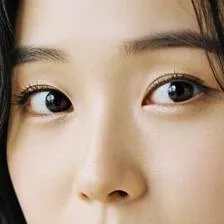
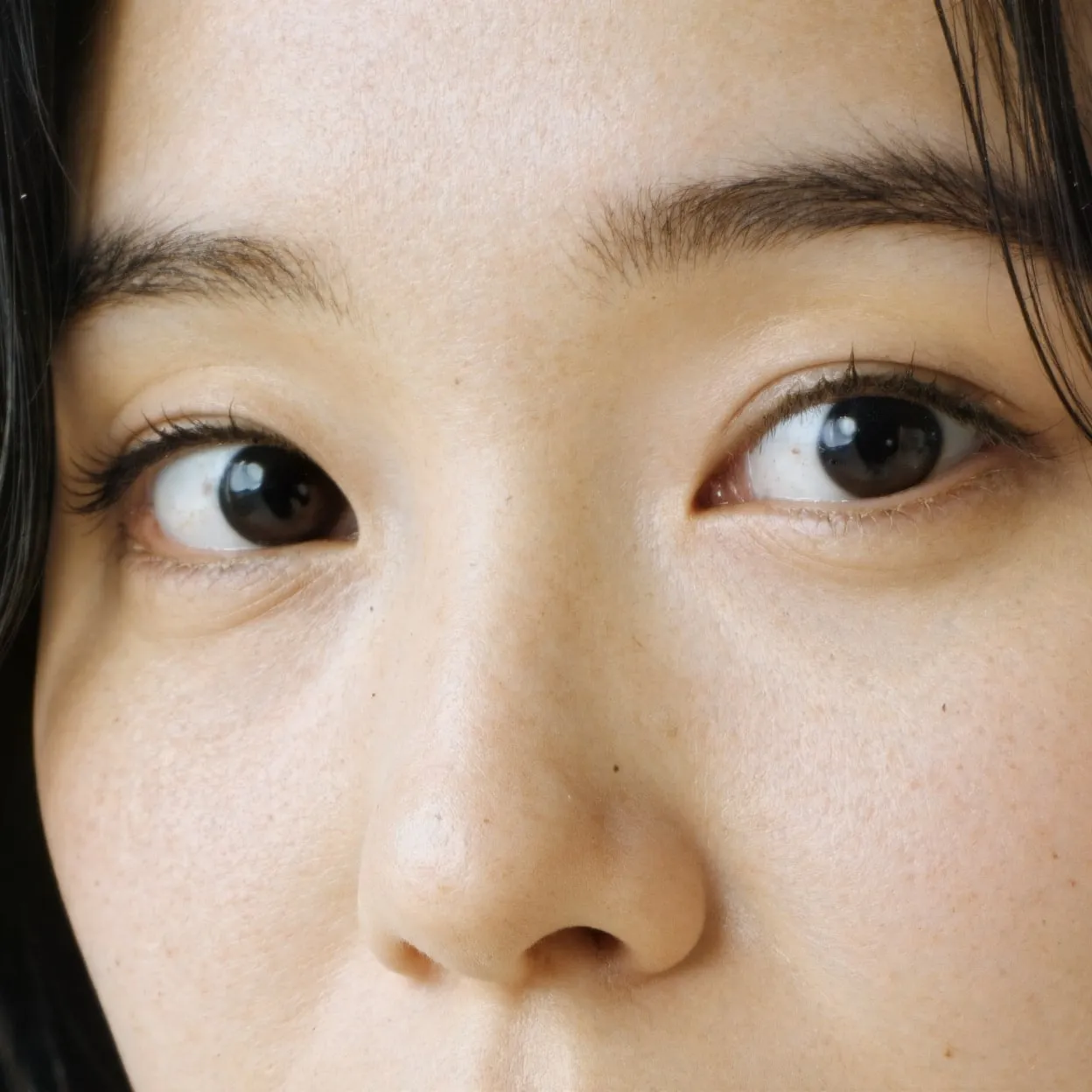
Upsampler covers the ESRGAN use case and the ground beyond it. Precise Upscale (SeedVR2 / GAN) delivers the faithful enlargement ESRGAN users expect, with a modern diffusion-transformer option in SeedVR2 that cleans compression and noise far better than classic GAN checkpoints. Creative Upscale (Flux or Stable Diffusion) then does what no ESRGAN variant can: regenerate the image at higher resolution with new, contextually correct detail, from realistic skin in portraits to texture in game assets. Everything runs in the browser, with an API when you want the pipeline in code.
From SRCNN to SeedVR2: Ten Years of Upscaling Research in Five Steps
Knowing where ESRGAN sits in the research timeline explains why its results look the way they do. SRCNN (2014) proved a neural network could beat classical interpolation. SRGAN (2017) introduced the adversarial idea: instead of minimizing pixel error, which produces blur, train against a discriminator so outputs look real. ESRGAN (2018) refined that recipe with RRDB blocks and a better perceptual loss, winning the PIRM super-resolution challenge and becoming the community standard. Real-ESRGAN (2021) made it practical by training on synthetically degraded images, so it could handle real-world JPEGs instead of laboratory test sets. And then the field left the GAN paradigm: diffusion-based restorers (StableSR, SUPIR) and diffusion-transformer models like SeedVR2 reconstruct images from a learned prior of what the world looks like, rather than sharpening whatever pixels exist. That last generation is what Upsampler's Precise Upscale runs in production.
Why GAN Upscalers Plateaued
The limitation is structural, not a matter of better training. A GAN upscaler learns a direct mapping from low-resolution patch to high-resolution patch, which makes it fast and faithful, but everything it outputs must be derivable from the input pixels. When the source genuinely lacks information, heavy compression, tiny faces, distant texture, the safest mapping is a smooth one, which is exactly the waxy averaging users complain about. Diffusion models invert the trade: they carry a learned prior of plausible detail and use the input as a constraint, so they can reconstruct a believable brick wall or iris where a GAN can only smear one. The cost is compute, which is why this generation of models lives on cloud GPUs rather than in a desktop app, and why "just run it locally" stopped being the obvious answer around the time the GAN era ended.
The ESRGAN Ecosystem, Mapped
"Using ESRGAN" in practice means picking one of these routes:
| Route | Good for | The catch |
|---|---|---|
| Original Python repos | Research, custom pipelines | 2022-era dependency rot, frozen development |
| Upscayl (desktop GUI) | Easiest local option, actively maintained | Still needs a discrete GPU; limited to bundled models |
| chaiNNer / ComfyUI nodes | Power users chaining models and face fixers | Steep learning curve, you are the QA department |
| Replicate and other hosts | API access without infrastructure | Per-run fees on cold-start hardware, same frozen models |
| OpenModelDB checkpoints | Niche content (specific games, manga, film scans) | 600+ models, thin guidance, mixed licenses |
The License Trap in Community Checkpoints
One detail bites freelancers late: the code and official weights of Real-ESRGAN are permissively licensed (BSD), but many of the community checkpoints people actually recommend are not. 4x-UltraSharp, a perennial favorite, is licensed for non-commercial use, and plenty of niche models on OpenModelDB inherit restrictive terms from their training data or parent models. If you upscale client work with a random recommended checkpoint, you may be violating its license without knowing. Hosted platforms remove that diligence burden; Upsampler's plans include commercial use on every tier, including one-time credit packs.
When Running ESRGAN Yourself Still Makes Sense
If you own a capable GPU, enjoy tinkering, and process large volumes where per-image cloud pricing adds up, a local setup is free forever and fully private, and the actively maintained Upscayl app makes it genuinely approachable. Specialized community checkpoints for niches like manga or specific game textures can also beat general models inside their niche. The cost is your time: environment maintenance, fork churn, license checking, and manual quality control. For everyone whose job is the image rather than the pipeline, a hosted platform gets better results with none of the overhead.
Related Comparisons
If you landed here from the open-source world, two neighboring pages are probably relevant: the waifu2x comparison covers the anime-specific fork ecosystem (Real-CUGAN, the anime6B checkpoint, and friends), and the Clarity AI comparison covers the open-source route on the creative side, a Stable Diffusion pipeline you can self-host. For the commercial desktop benchmark, see our Topaz Gigapixel breakdown.